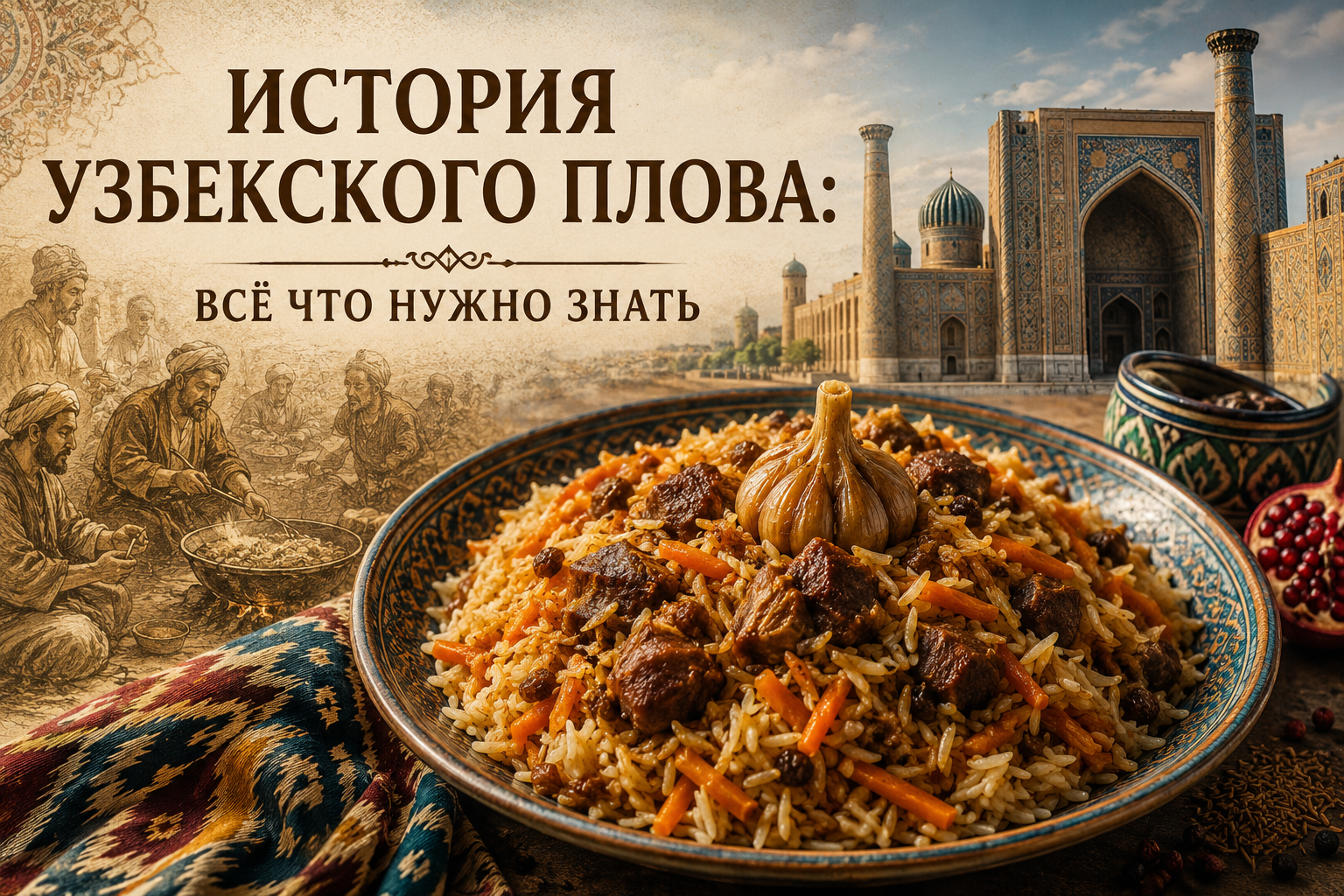
Plov is not just a dish. It's a cultural code, a philosophy, and a way of communication. In Uzbekistan, plov is cooked at weddings and funerals, at business meetings and family Sundays. It's prepared for presidents and for neighbors. In 2016, UNESCO inscribed Uzbek plov on the list of intangible cultural heritage of humanity. And it was well deserved.
Let's break it all down: where it came from, why it is the way it is, and where to eat it.
The Origins of Plov
Plov is an ancient dish. Its roots go back to the era of the Great Silk Road, when trade routes connecting China, India, Persia, and Europe ran through Central Asia. Along with traders came spices, rice, and culinary traditions.
The first mentions of a dish made from rice with meat and fat appear in Persian texts from the 10th century. According to legend, the great scholar and philosopher Avicenna (Ibn Sina), who lived in Central Asia from 980–1037, prescribed a dish of rice with carrots and meat as a medicinal treatment — for recovering strength after illness. This is the prototype of plov.
The name comes from the Persian «پلو» (polo) or «pilāw» — boiled rice. Through centuries and peoples, the word transformed into «plov», «pilaf», «pilaf», «paella» — yes, Spanish paella is a relative of Uzbek plov.
As the dish spread across Central Asia, each people adapted it to their products and tastes. In Uzbekistan, plov acquired its final form: cotton oil, tail fat, yellow carrots, chickpeas, devzira rice — and a cauldron over an open fire.
Why Plov Is More Than Just Food
In Uzbek culture, plov holds a place that in other traditions is occupied by bread or rice. It is present at all key life events:
Wedding — plov is cooked the day before, at the «plov-toy». Men wake up at 4 in the morning, light a fire, cook for hundreds of guests. It's a separate event within the event itself.
Funeral — plov is the traditional commemorative dish. Simple, without frills, as a symbol of humility.
Business meeting — in Uzbekistan, they say: real deals are not made at the negotiating table, but over plov. Sharing a meal creates trust that no contract can replace.
Friday — in many families, Friday plov is a sacred tradition. Men cook, the family gathers.
How Real Plov Is Made
Plov is not a recipe. It's a technology that takes years to learn.
Main Components:
Zirвak — the foundation of plov. This is fried meat (usually lamb or beef) with carrots and onions, stewed in oil with spices. The quality of zirвak determines 70% of the taste.
Rice — in Uzbekistan, devzira is traditionally used — a reddish rice from the Fergana Valley. It's dense, almost doesn't fall apart when cooked, absorbs fat and spices. This is not the rice you buy at the supermarket.
Oil — cotton oil or tail fat. It's the fat that determines that special flavor that can't be reproduced with bottled vegetable oil.
Spices — cumin (zira) — the main one. Barberry — for tartness. Turmeric — for color. Garlic — a whole head, unpeeled, right into the rice.
Cauldron — cast iron, over an open fire. In the oven or on an electric stove, plov turns out different. Fire is not tradition for tradition's sake — it's technology.
How It's Prepared:
- Oil is heated until it smokes — this calcination removes unwanted odors
- Onions are fried until dark golden
- Meat is added, fried until a crust forms
- Carrots are added — in long thin strips, not grated
- Water is poured in, spices are added — zirвak is simmered for 40–60 minutes
- Rinsed rice is spread in an even layer, not stirred
- A «dome» is created, covered — rice finishes steaming
The entire process takes 2–3 hours. Authentic plov does not tolerate haste.
Regional Variations: What's Different
Uzbekistan is a country with strong regional culinary traditions. Plov in Tashkent and plov in Fergana are different dishes.
Fergana Plov — considered the standard. Devzira rice, lots of zirвak, dark color, rich flavor. Oil is not spared. This is the plov most often meant when people say «authentic».
Tashkent Plov — slightly lighter, whiter rice (often using other varieties). A more «urban» version, less fatty.
Samarkand Plov — rice and meat are not mixed, but served in layers. Large pieces of meat on top. Visually different from Fergana plov.
Khorezm Plov (shavlya) — with tomatoes, more tomatoey, less fatty. Controversial from an orthodox point of view, but very delicious.
Wedding Plov (toy osh) — cooked on maximum volumes in huge cauldrons. Special technique, special proportions. Masters who can cook wedding plov for 500 people — that's a separate profession.
Who Is an Oshpaz?
Oshpaz — a plov master. This is not just a cook, but a recognized master called upon for important events. A good oshpaz in Uzbekistan is a respected person; their services are expensive and booked in advance.
The tradition is passed from teacher to student. A real oshpaz learns for years: first observes, then helps, then cooks under supervision. Only after this can he cook plov independently.
In Tashkent, there are famous oshpazes whose names are known throughout the city. People come specifically to them; their plov is a separate event.
Plov and Business
In Uzbek business culture, plov holds a special place. Inviting a partner for plov is a signal of serious intentions. Sharing plov means: "I accept you, I'm ready to speak honestly."
That's why many negotiations in Uzbekistan don't begin in conference rooms but in plov houses. The atmosphere by the cauldron removes formality, creates trust. Deals that were debated endlessly in the office get closed over plov.
For foreign partners — this is important to understand. Refusing plov means refusing trust.
Where to Eat the Best Plov in Tashkent
Plov is a morning dish. Most plov houses operate only until 1:00 PM–2:00 PM — when it runs out. You should come in the morning, preferably before 11:00 AM.
What to look for: specialized plov houses, not general restaurants. In establishments where plov is the main dish, it's always better.
Tip: choose a place where the cauldron is visible — this is a sign that plov is cooked correctly and in large quantities. Plov that's been simmering in a cauldron for three hours is completely different from plov reheated the next day.
All current addresses of plov houses and restaurants with Uzbek cuisine are on Horix.uz.
Plov Today: Between Tradition and Restaurant
Tashkent's gastronomic scene is actively reinterpreting plov. Restaurants are appearing where plov is served in author's interpretation: with duck, with seafood, with truffle. This causes debate — tourists are against it, gastronomists are for it.
But traditional plov isn't going anywhere. As long as there are cauldrons, tail fat, and devzira rice — plov will remain what it has been for a thousand years: food that brings people together.